
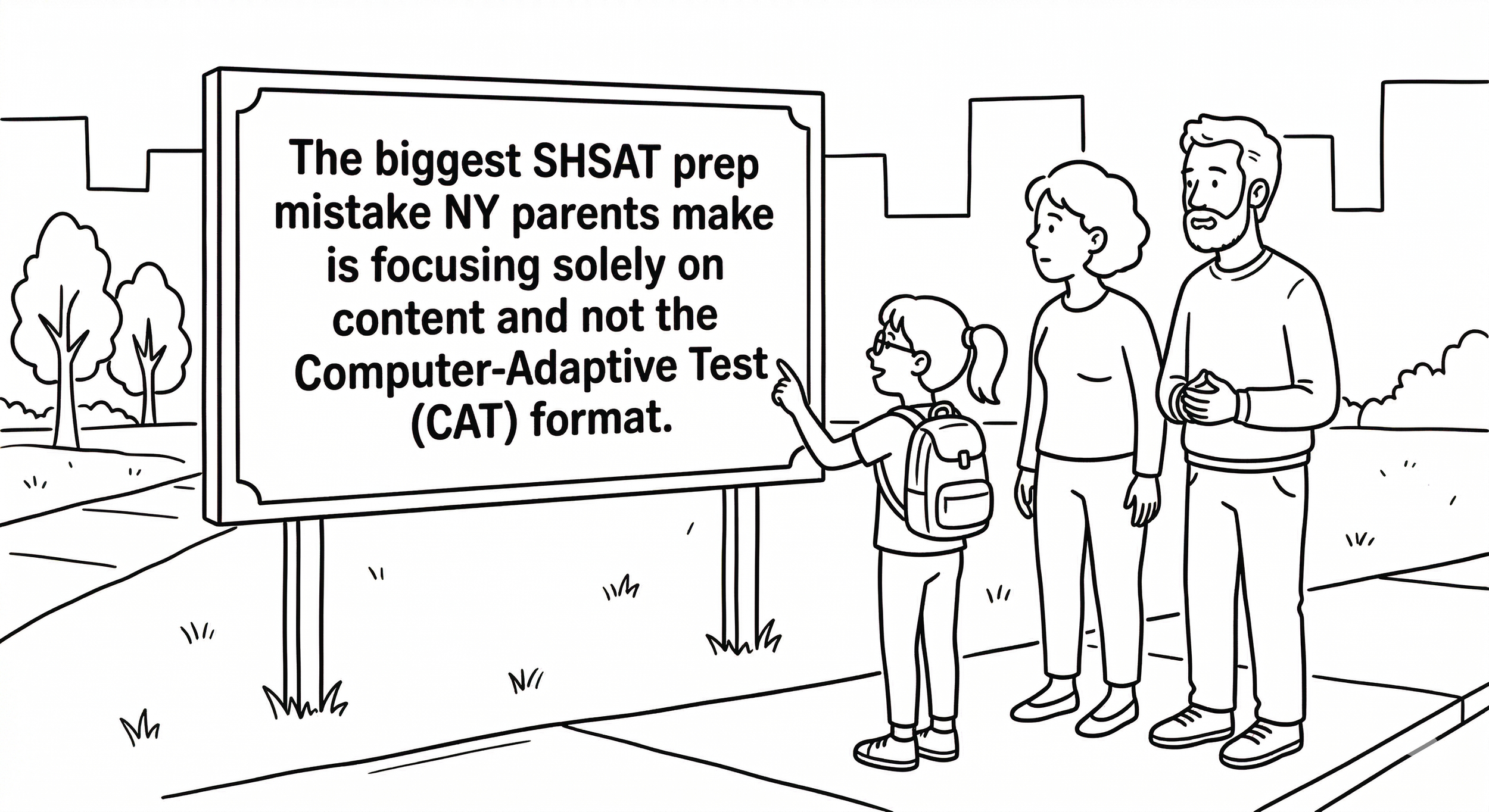
The SHSAT no longer tests only what your child knows—it tests how your child performs inside an adaptive algorithm under sustained pressure
The SHSAT has transitioned from a fixed exam to a Computer-Adaptive Test (CAT) with Technology-Enhanced Items (TEI).
That shift changes everything.
Performance is no longer judged by how many questions a student can memorize or how many practice tests they complete.
It is measured dynamically—under pressure, across changing difficulty, and against the clock.
What matters now is not just what a student knows, but how consistently they perform as conditions change.
Families routinely invest significantly in SHSAT preparation and advisory services without ever training inside the actual adaptive testing environment.
That’s precisely why we built the Simulator.
[ Get Started ] or [ Try a Complimentary Simulation ]
How Technology-Enhanced Items (TEI) Function on the SHSAT
Why Traditional SHSAT Prep Is Failing
The Ghost In The Machine
The current SHSAT uses Item Response Theory (IRT), the mathematical model behind adaptivity, where the algorithm dynamically adjusts question difficulty based on responses.
Traditional paper tests are linear; every question has the same weight.
The adaptive algorithm doesn’t just wait for an answer—it measures the timing and stability of every click.
The Pacing Gap
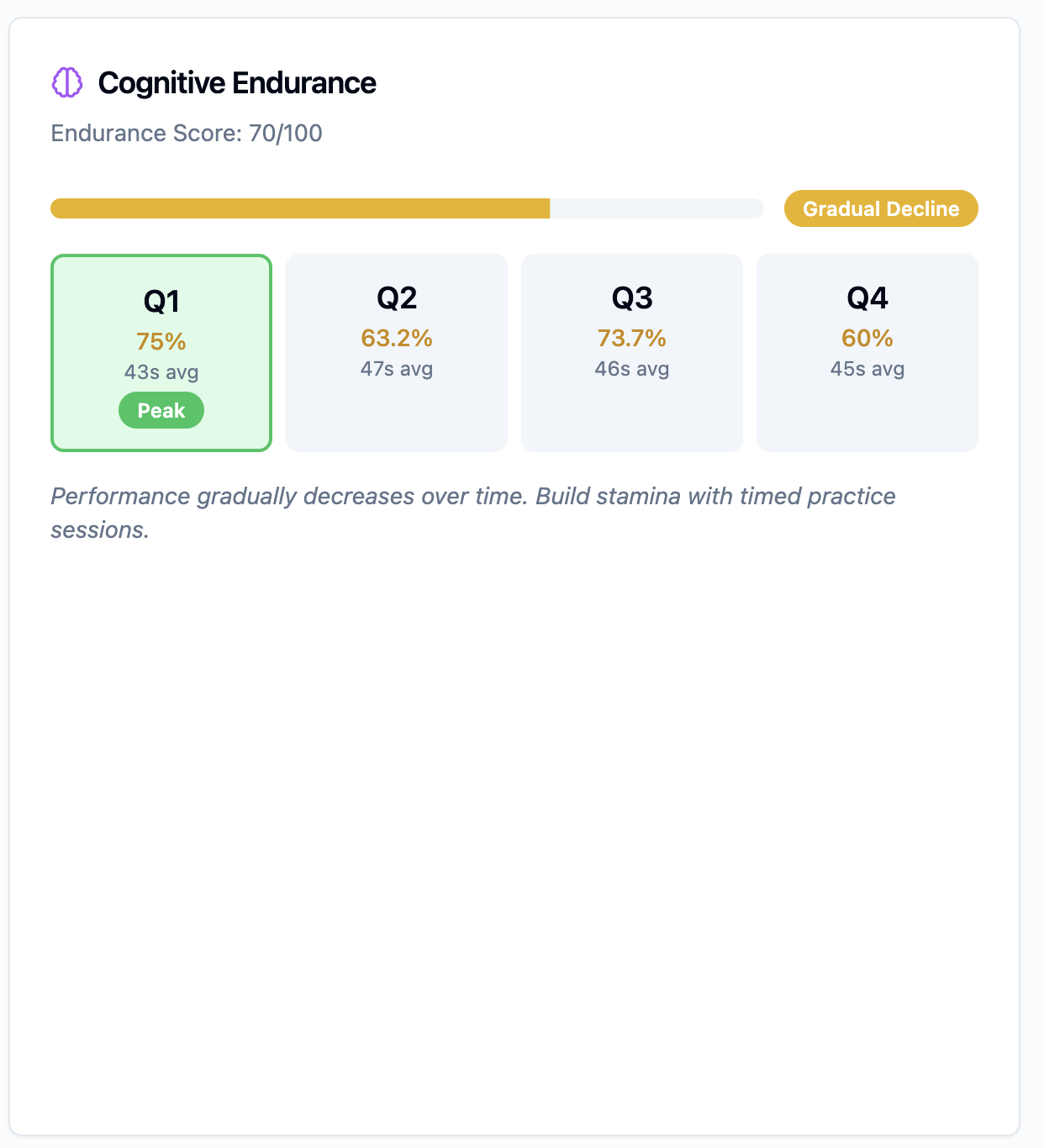
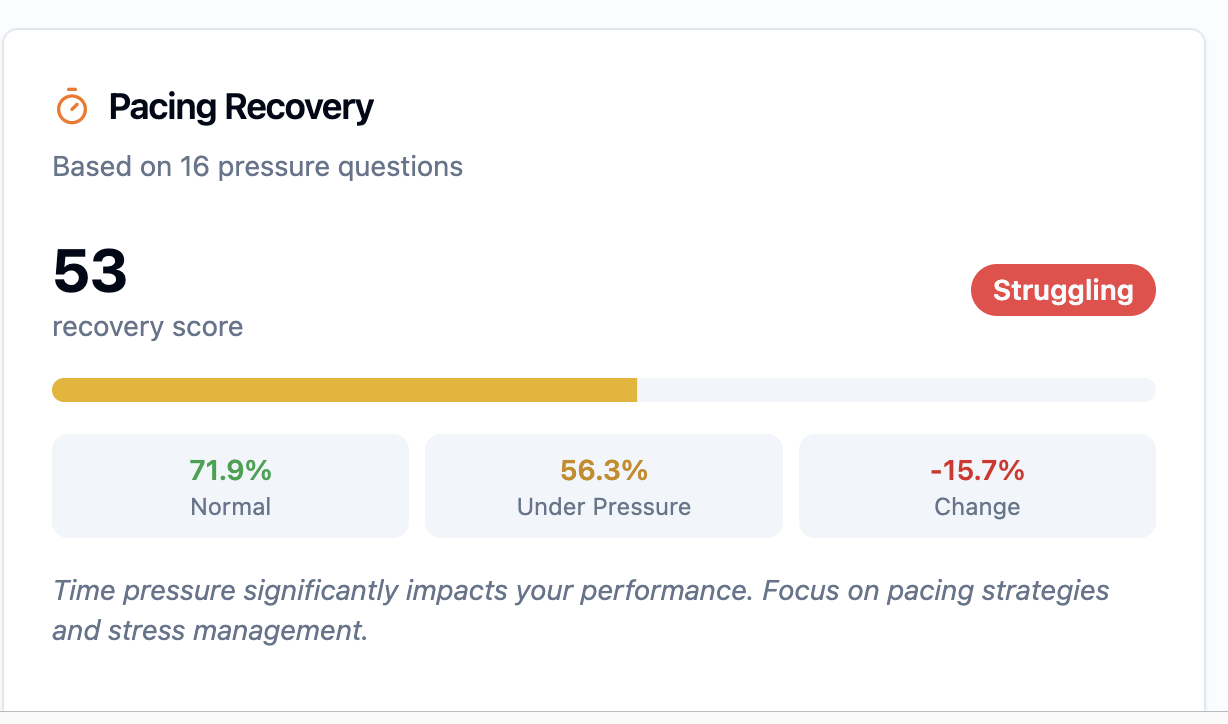
Many students experience gradual slowdowns in speed or accuracy in the final 45 minutes of a three-hour exam.
In a computer-adaptive test environment, a single fatigue-related error on a seemingly “easy” question late in the test can drop a student’s percentile rank by 10–20 points.
The algorithm interprets that as lower ability, affecting the final score.
Strong students don’t struggle on the SHSAT because they lack knowledge.
They lose points because the exam now penalizes performance breakdowns that traditional preparation doesn’t measure or address:
Technology-Enhanced Items that require multi-step interaction, sequencing, and on-screen execution
Digital pacing pressure that compounds fatigue and accelerates late-section errors
Adaptive difficulty changes that shift the scoring environment in real time
Performance dips in the final section, when cognitive endurance matters most
Yet most students are still preparing with static materials that cannot observe, measure, or correct these dynamics.
The result is a dangerous mismatch:
High practice scores
Low predictive accuracy
False confidence heading into test day
Effort has not disappeared—but effort without measurement is no longer reliable.
[ Get Started ] or [ Try a Complimentary Simulation ]
What the SHSAT Is Actually Measuring
The modern SHSAT evaluates performance as a sequence, not a snapshot.
Specifically, it observes:
Performance under pressure
How accuracy changes as cognitive load increases.
Response to shifting difficulty
How students adapt when the test pushes above or below their comfort range.
Time-constrained decision-making
How pacing choices affect downstream performance.
Consistency over duration
Where accuracy decays as mental fatigue sets in.
Two students with identical content knowledge can produce very different outcomes depending on how they behave inside these conditions.
The exam is not asking, “Do you know this?”
It is asking, “Can you maintain performance as the system adapts around you?”
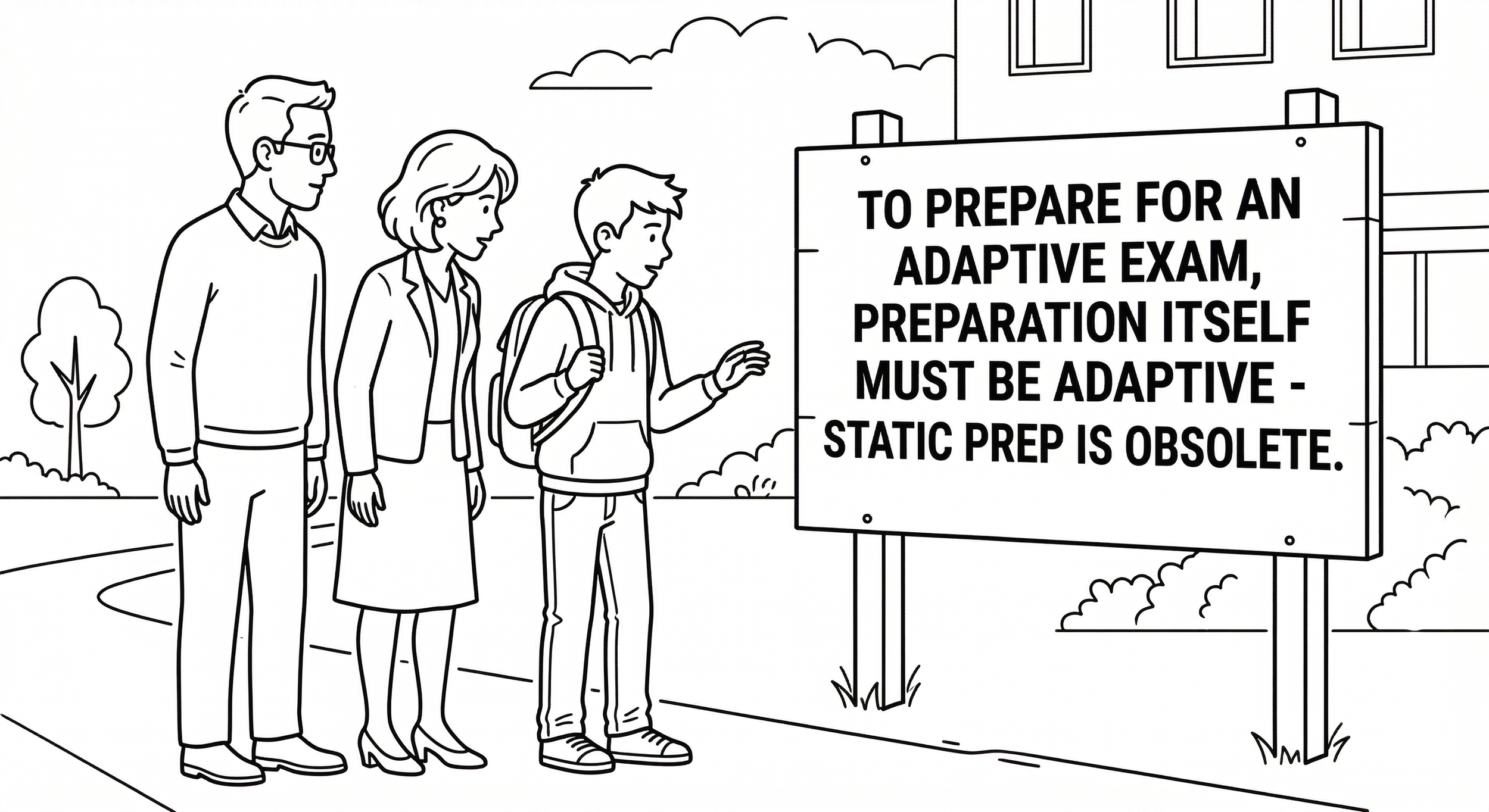
The SHSAT (CAT) Simulator Measurement Framework
The SHSAT (CAT) Simulator framework is built around one principle:
You cannot improve what you cannot see.
Instead of focusing on volume, this framework prioritizes:
Continuous ability estimation
Real-time difficulty adjustment
Pattern detection across sessions
Longitudinal performance tracking
Preparation is treated as a measurement problem first, and a study problem second.
This allows decisions to be made based on data, not intuition.
What Measurement Looks Like in Practice
This is not a practice test.
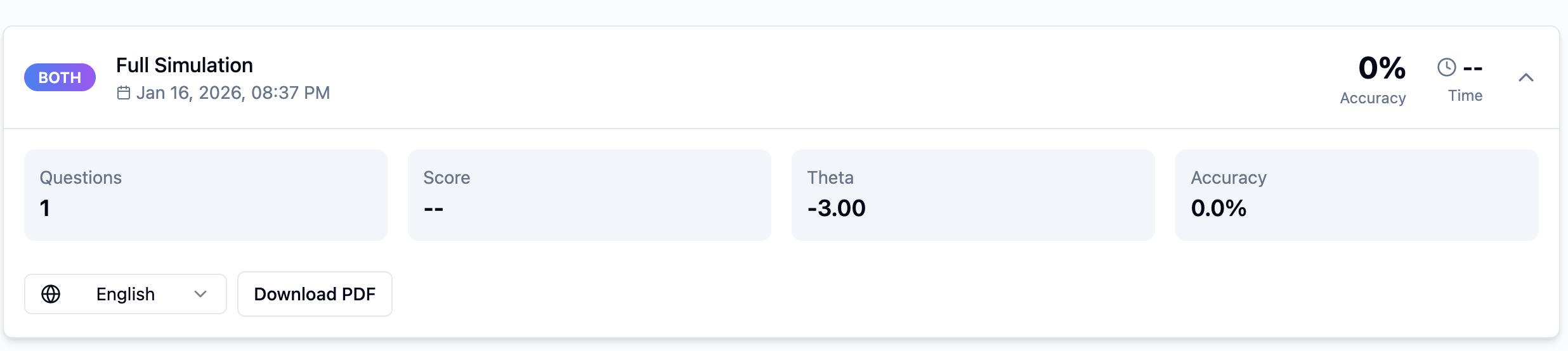
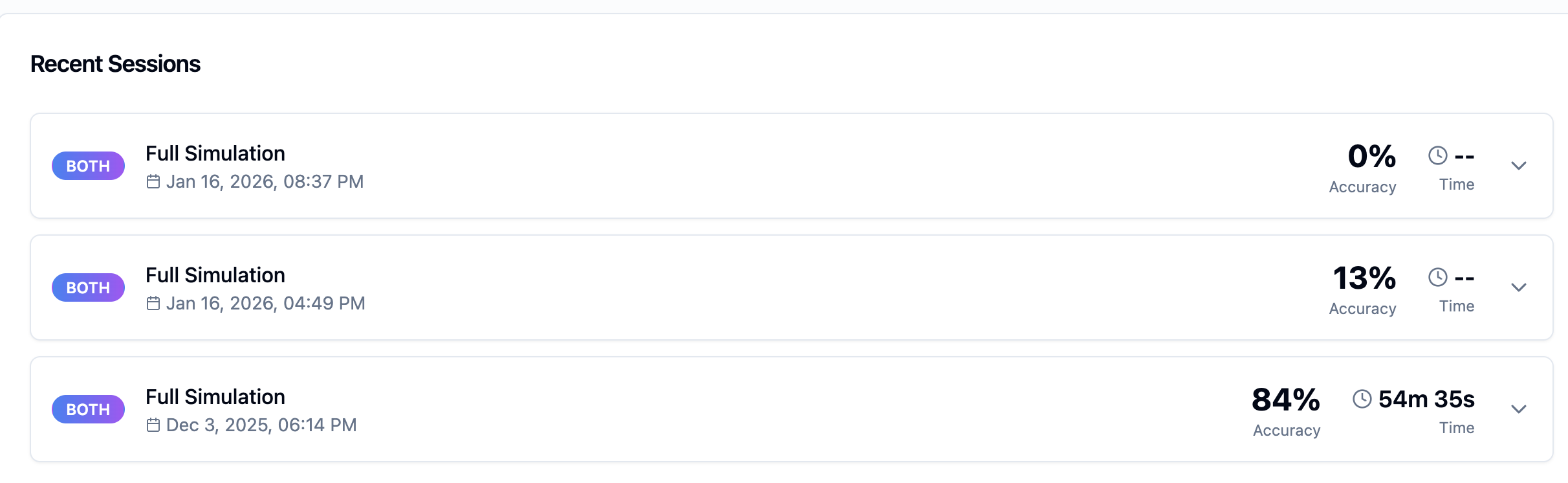
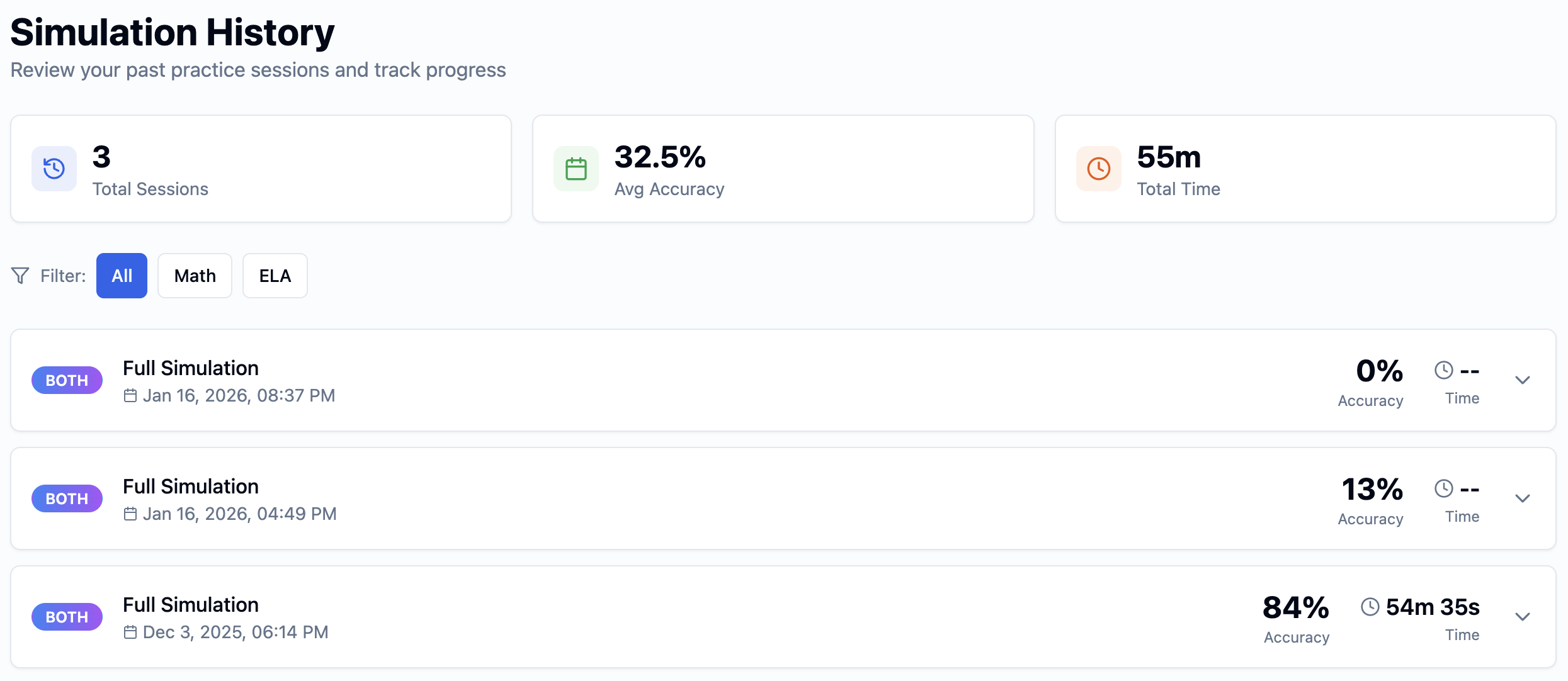
The Simulator is a live measurement environment.
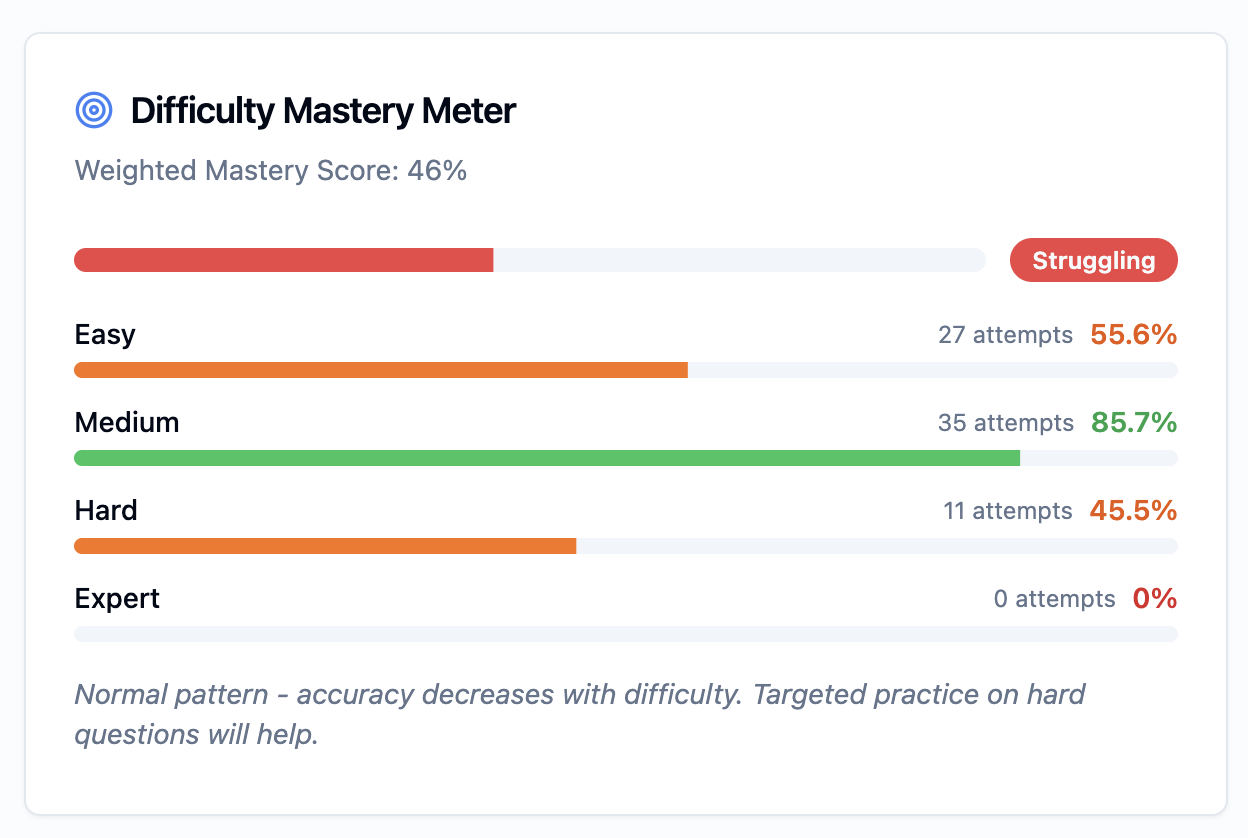
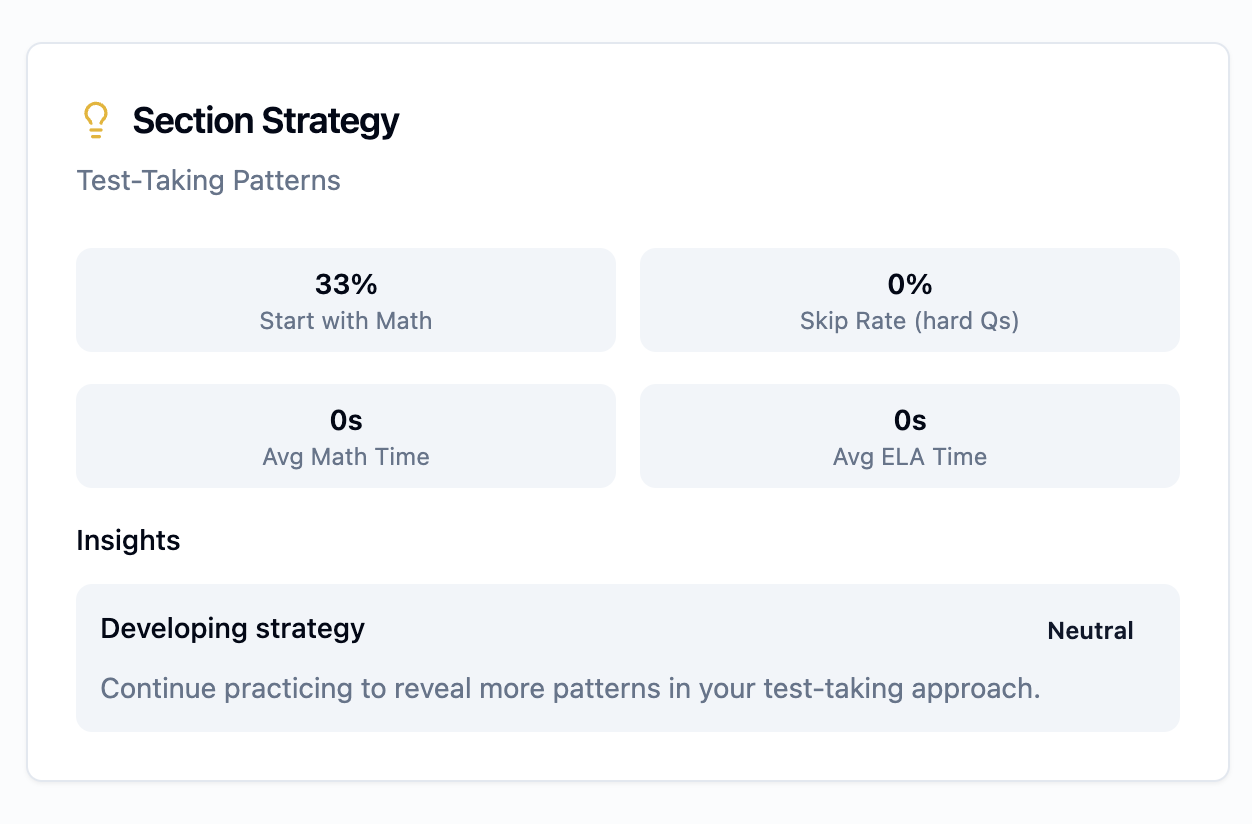
Each session records:
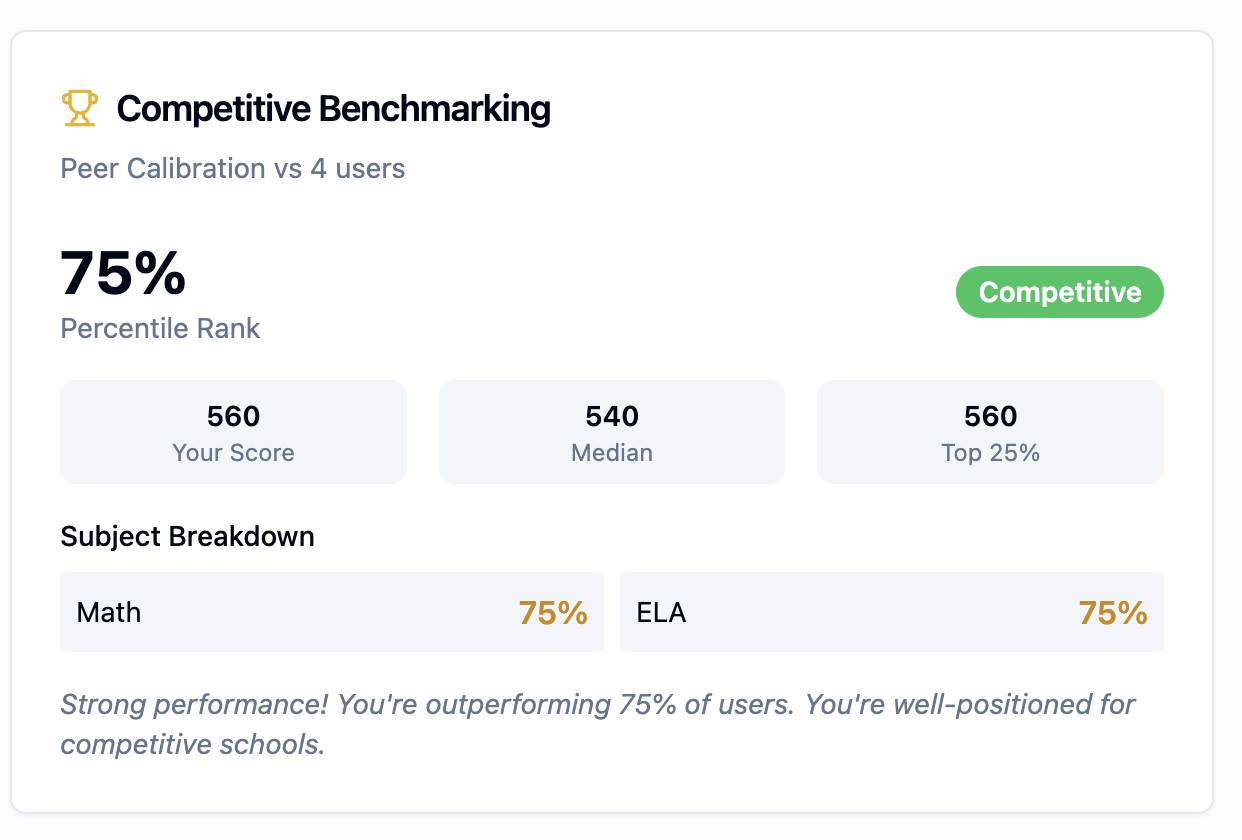
Ability movement over time
Accuracy by difficulty band
Timing behavior at decision points
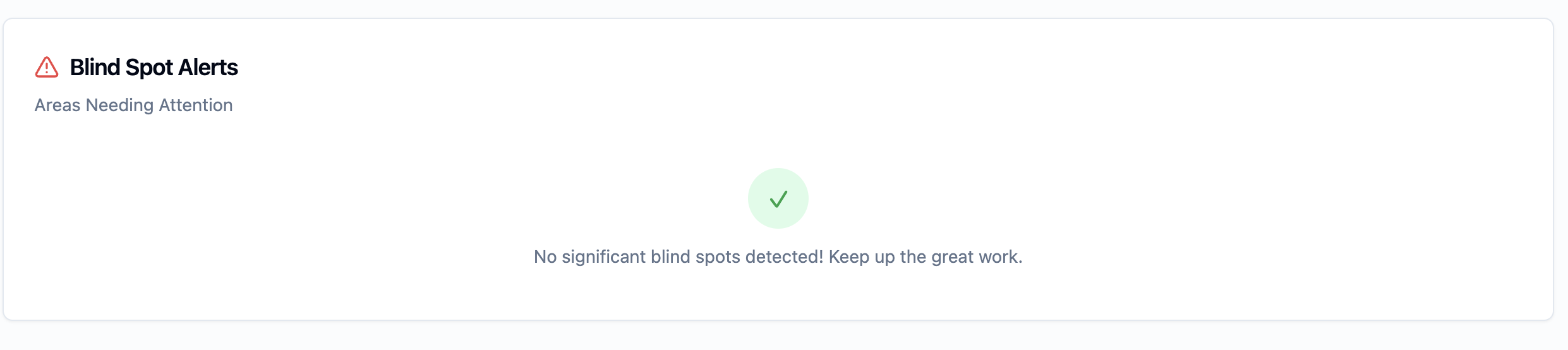
Where performance stabilizes or breaks
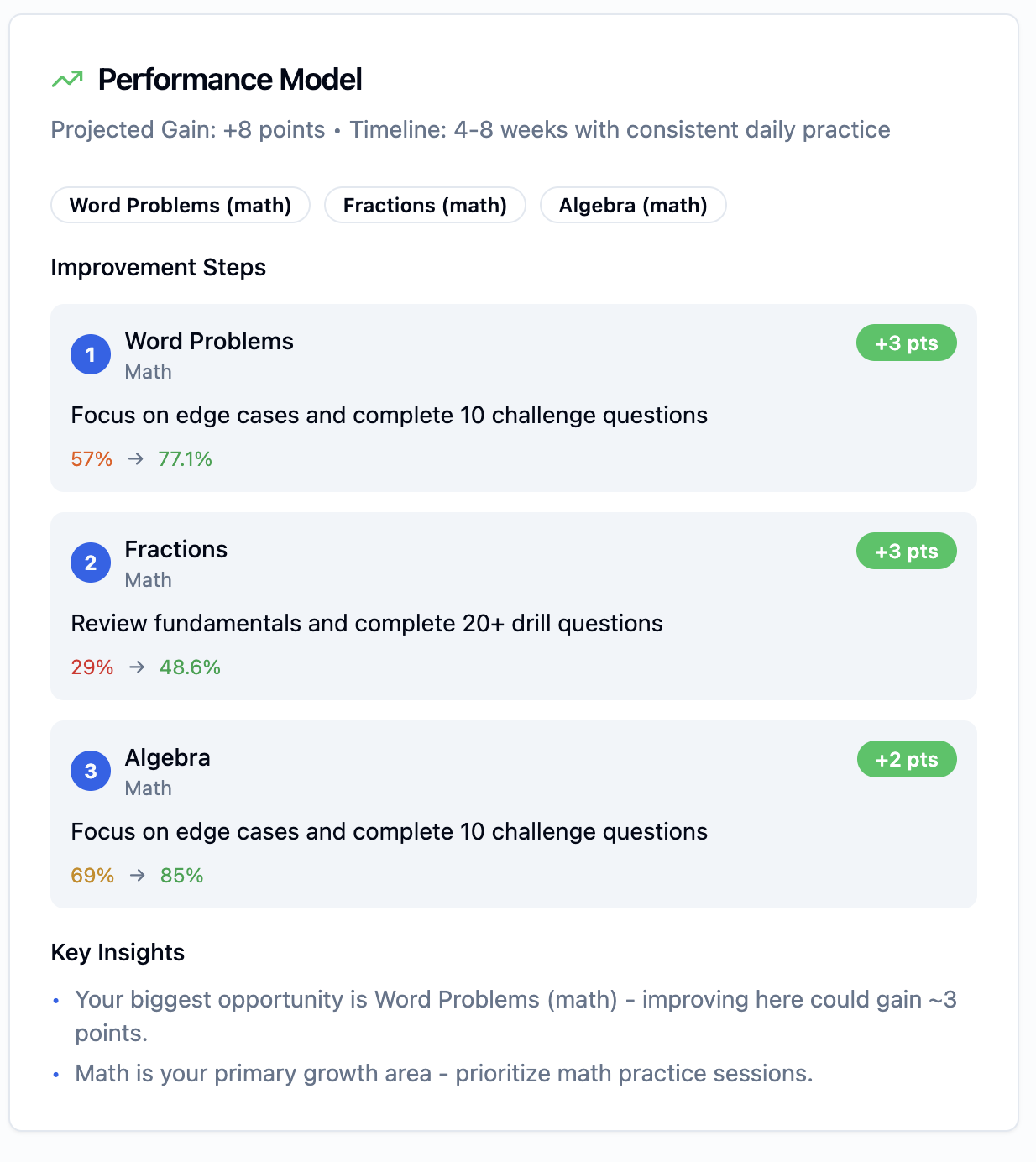
These dashboards do not exist to “motivate” students.
They exist to answer specific questions:
Is improvement real or volatile?
Which errors are structural versus situational?
Where does performance decay begin?
Which interventions will actually move the needle?
This is the difference between doing more and doing what matters.
[ Get Started ] or [ Try a Complimentary Simulation ]


Why Oversight Depth Changes Outcomes
Measurement alone is not enough.
Data must be interpreted correctly, or it becomes noise.
Different families require different levels of oversight:
Some need confirmation that progress is stable
Others need intervention before decay becomes entrenched
Some require full predictive modeling and endurance analysis
This is why oversight is structured in levels.
More oversight does not mean “more features.”
It means greater visibility into why outcomes are changing.
When oversight increases, decisions become faster, clearer, and more precise.
The Next Step Is Simple
If this framework aligns with how your family thinks about preparation, you may proceed to review measurement capability by tier, capacity limits, and placement options.
[ Get Started ] or [ Try a Complimentary Simulation ]